
Editorial review: Celenest Product & Project Review · Updated 2 August 2026 · Technical and regulatory claims are bounded to the cited source and project-specific verification.
Short answer: A useful glamping business plan starts with a site and guest proposition, then tests permissions, utilities, operating capacity and total delivered cost. Buying units before those constraints are known is one of the fastest ways to trap capital in an unusable site.
Define the guest promise
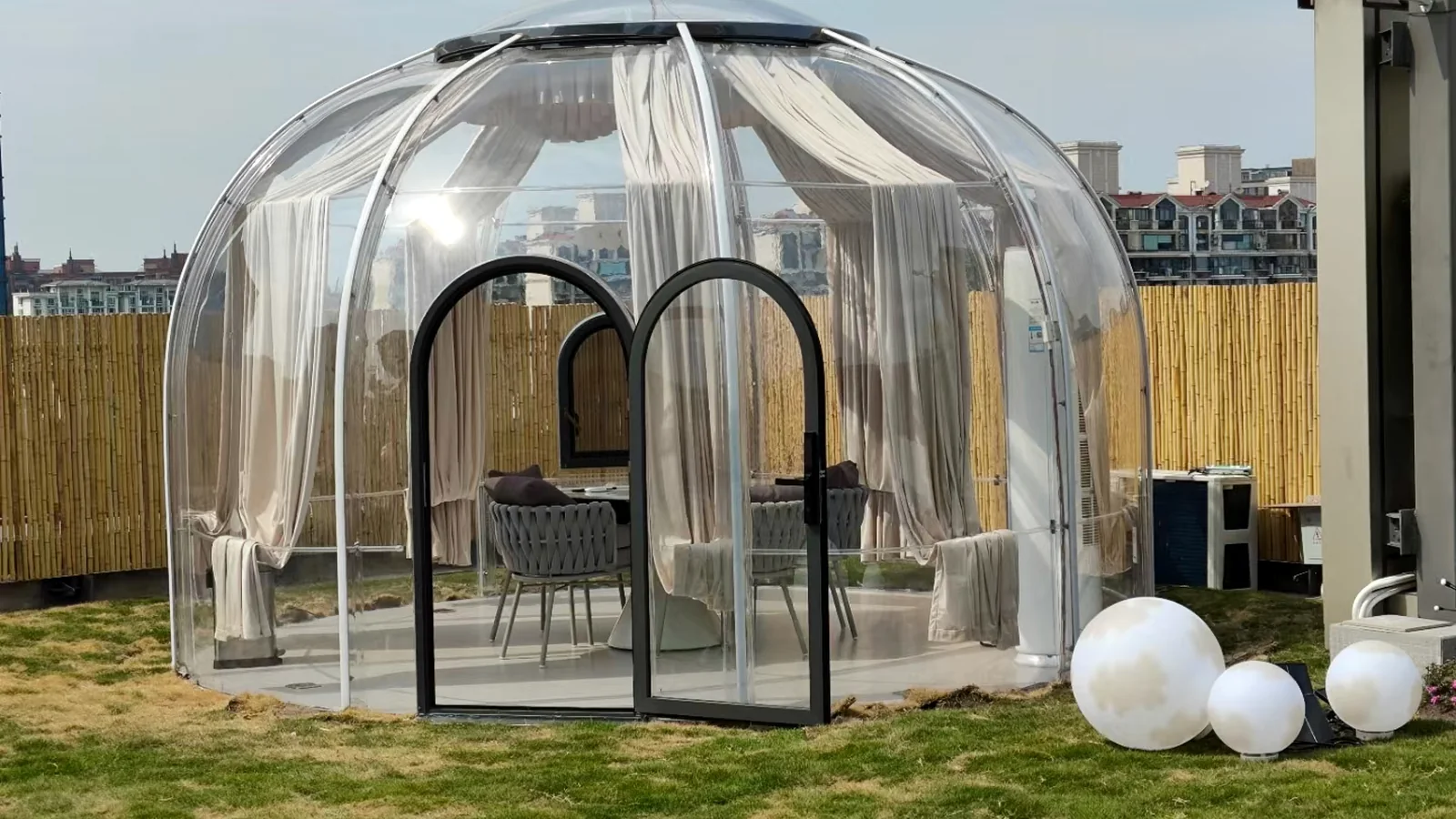
Decide whether the offer is quiet stargazing, family nature stays, a couples’ retreat, event accommodation or an architectural destination. That decision drives privacy spacing, bed count, bathrooms, food service, lighting and the acceptable nightly service workload.
Do not build the forecast from a competitor’s best weekend rate. Model shoulder-season demand, cleaning time, platform commissions, maintenance, utilities, insurance and staff coverage. Use your local data; a manufacturer cannot responsibly promise occupancy or payback.
Build the site plan before the shopping list
Map access, parking, emergency routes, views, prevailing wind, drainage, utilities, waste, noise buffers and accessible routes. Then place domes with realistic decks and service zones. A beautiful unit cannot repair a site plan that gives every guest a view of the next unit’s car.
Separate fixed infrastructure from scalable inventory. Power, water treatment, roads and reception may need to support the final phase even if the first order is small.
Turn the plan into an RFQ
For comparable quotes, send diameter, quantity, destination, application, climate, required accessories, target delivery window and the approval documents you need. Ask each supplier to separate unit price, accessories, packing, freight assumptions, taxes excluded and site work excluded.
Celenest offers EXW reference pricing and project quotations. Delivered cost depends on destination and order configuration; local installation, foundations, permits and utility work are not silently bundled into a factory price.
The decision in one table
| Decision | Confirm before purchase | Common failure |
|---|---|---|
| Use | Occupancy, season, guest or crop needs | Choosing by appearance alone |
| Site | Loads, access, drainage, utilities and approvals | Treating the unit as independent of its site |
| Scope | Drawings, components, accessories and exclusions | Comparing incomplete headline prices |
| Operation | Cleaning, ventilation, inspection and spare parts | Budgeting only for opening day |
Evidence, uncertainty and editorial boundary
Search volume and difficulty describe demand, not suitability. Product performance depends on the ordered configuration, installation, maintenance and site. Planning, structural, fire, electrical, accessibility, public-health and hospitality rules vary by jurisdiction. Obtain approval from qualified local professionals and authorities where required.
Primary and authoritative sources
- UK government: self-catering accommodation rules
- ISO 21401 sustainability management for accommodation
Factory-ready RFQ checklist
- Guest segment and stay concept
- Permission and licence pathway
- Conservative demand model
- Utilities and operating labour
- Comparable landed-cost RFQ
- Quantity, destination, target delivery date and requested Incoterm
- Documents required for local review
Next step: Review the Celenest dome range, the real project gallery, and send a project RFQ with your site and intended use.
Frequently asked questions
How many domes should a new glamping site start with?
There is no universal number. Start from permissions, infrastructure economics, operating capacity and validated demand.
Can a supplier calculate my return on investment?
A supplier can document product costs and scope; occupancy, rates, taxes and operating costs require local evidence.
What should be ready before requesting a quote?
Site location, unit sizes, quantity, use, access, climate, desired accessories, delivery target and approval requirements.