
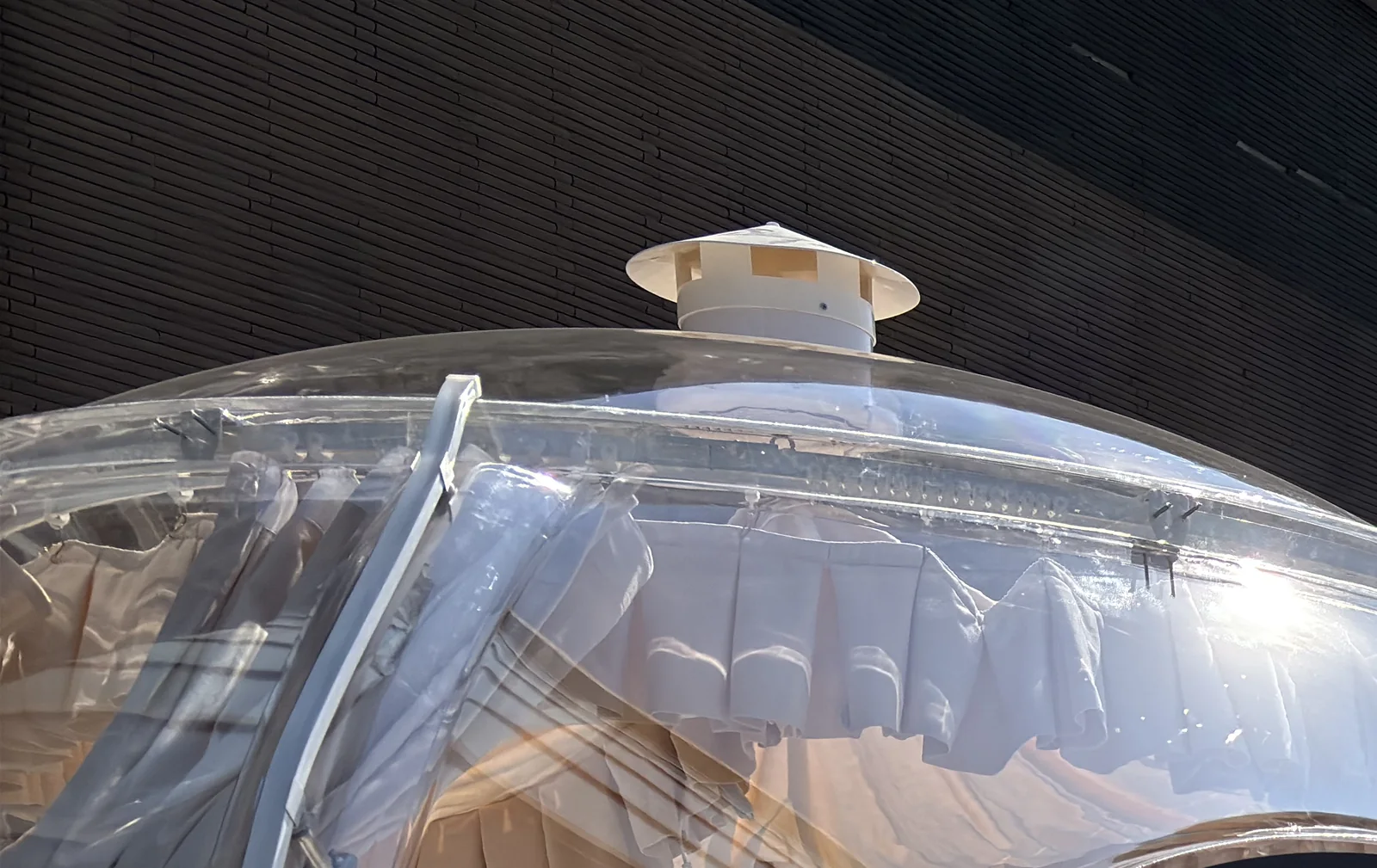
Built like a building. Not a balloon.
Celenest uses solid German Bayer polycarbonate, not temporary inflatable PVC film.
What a polycarbonate dome is.
A Celenest polycarbonate dome is a rigid, self-supporting shell of solid German Bayer polycarbonate on a 6063 aviation-grade aluminium base frame. It transmits 91% of visible light (ASTM D1003), resists impact roughly 200 times better than ordinary glass and 30 times better than acrylic, works continuously between −40 °C and 120 °C, carries a B1 flame-retardant rating and is rated to grade 14 wind. It holds its shape with no blower, no air pressure and no power — which is what separates a polycarbonate dome from an inflatable PVC bubble tent.
Move from an idea to a visible configuration.
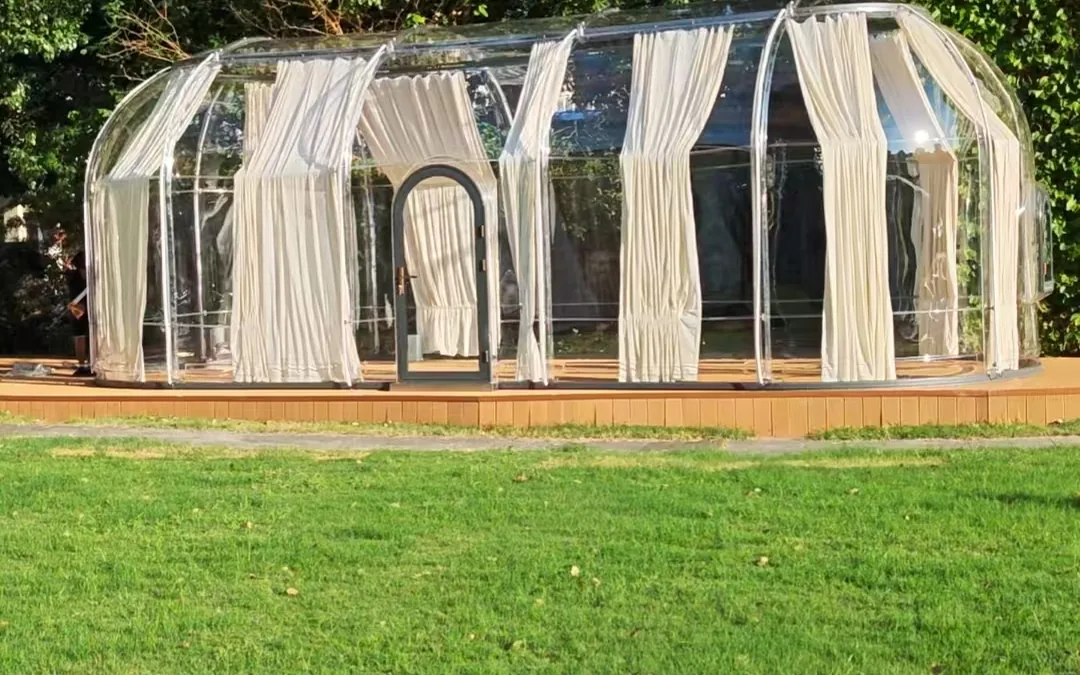
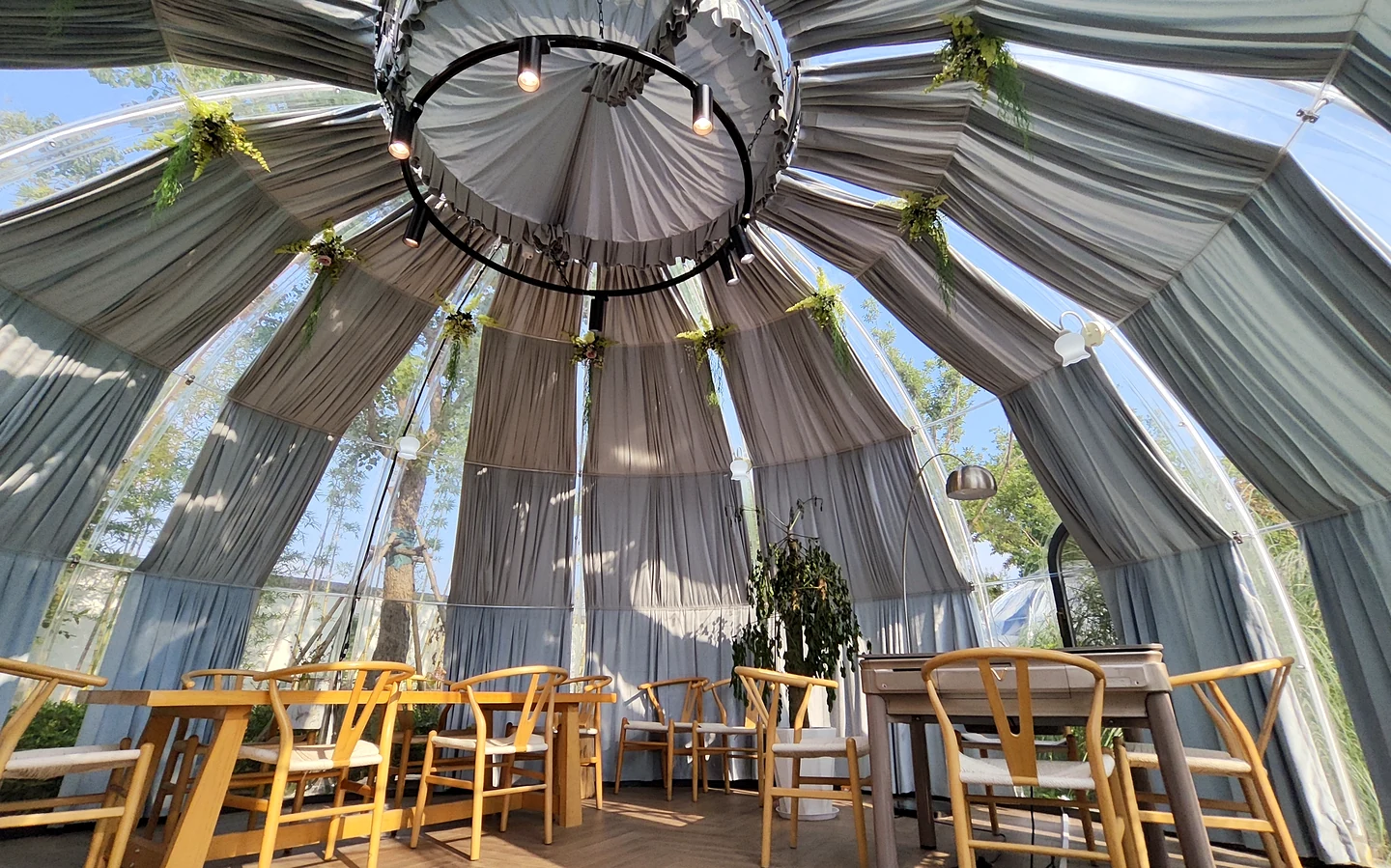
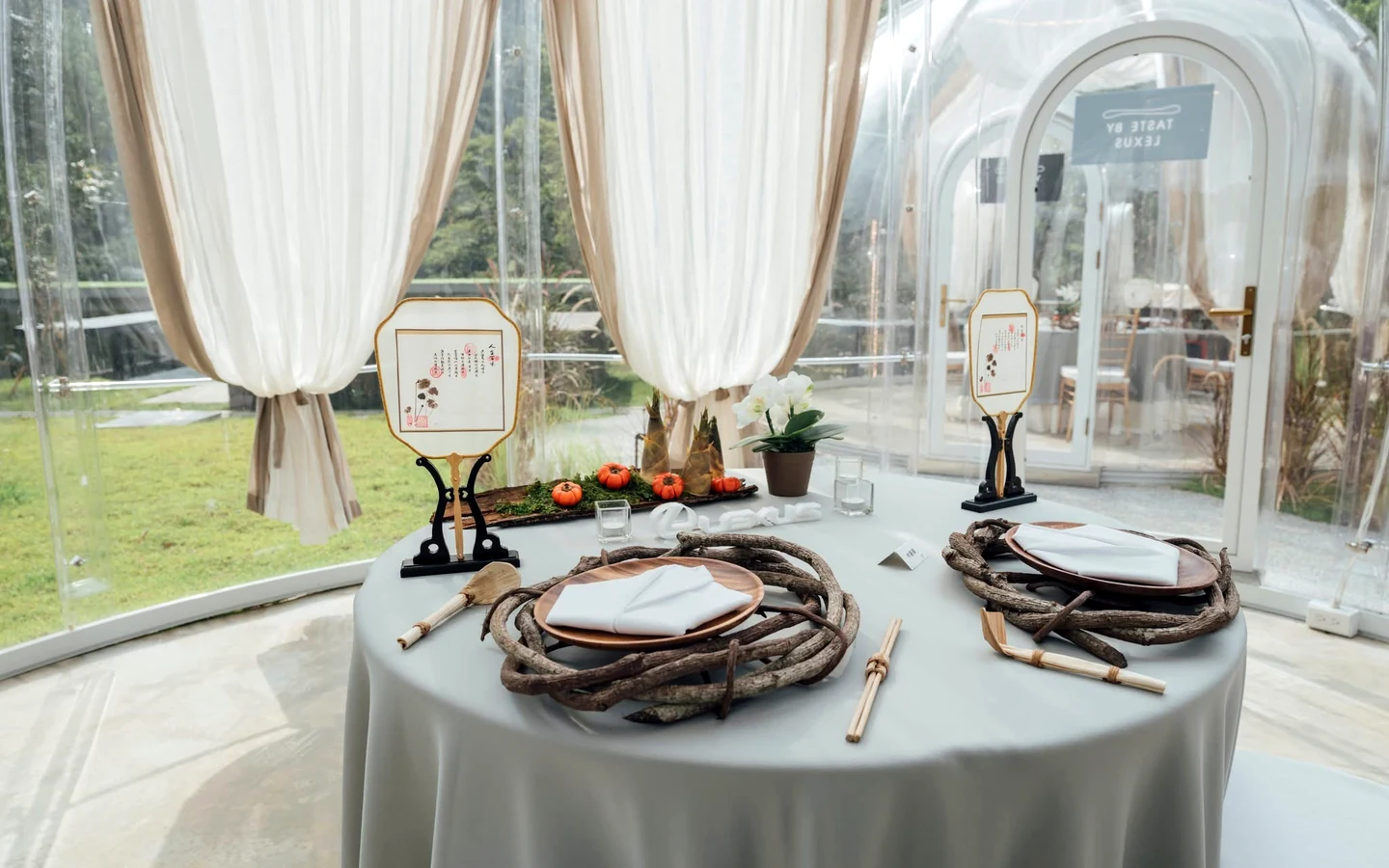
Clarity outside. Confidence underneath.
A better material makes a better business case.
Hospitality
Protect the premium experience with a structure built for seasons, not a short-lived attraction.
At home
Invest in a space that stays clear and inviting for years, rather than replacing a temporary bubble.
Distribution
Lead with a visible, measurable lifespan advantage — not a price race against PVC.
Polycarbonate dome or PVC bubble tent?
In a photograph they look alike. They diverge in the third winter.
One shell, four very different rooms.
Restaurant and rooftop
Outdoor igloo dining that keeps trading through rain and snow, with ventilation planned around covers, service flow and changeovers rather than around a photograph.
Resort and glamping
Glamping pods guests book for the view and photograph without being asked. Privacy, cleaning access and multi-unit delivery are planned against the opening date.
Home and garden
A garden pod for coffee at sunrise and stars after dark. The compact 2.1–3.5 m range starts at US$1,094 EX-WORKS, fully configured, with DIY installation guidance for every buyer.
Distribution
Wholesale from two units, factory direct, with sample terms, a defined launch range, spare parts and after-sales support behind it.
Before you compare prices.
Is it the same as an igloo dome or a garden pod?
Those are naming conventions, not materials. An igloo dome, garden pod, bubble house or dome tent can be built from inflatable PVC film, thin PC film or solid polycarbonate sheet. Celenest builds only the last of the three.
Will it survive wind and snow?
The shell is rated to grade 14 wind and grade 8 seismic. Snow load depends on the site: the dome, the anchoring and the foundation interface are matched to documented local conditions before a quotation is issued.
Does a clear dome overheat?
Solar gain depends on climate, orientation and operating hours. The answer is usually a combination — a solar-control light grey shell (99.9% UV and over 80% infrared blocked, 70% light transmission), top-lift ventilation, an exhaust fan and shade. Air conditioning is optional, not assumed.
Does polycarbonate yellow?
The 10-year warranty covers light transmission loss under 6% (ASTM D1003) and a yellowing index under 10 (ASTM D1925). That is a measured standard, not a marketing claim.
Can it stay outside all year?
Yes. The continuous service range is −40 °C to 120 °C and the base profile is 6063 aviation-grade aluminium. Expected outdoor service life is 15 years or more with normal use; the 10-year figure is the warranty period, not the lifespan.
Why does it cost more than a bubble tent?
Because you buy it once. A dome tent in solid polycarbonate starts at US$1,094 EX-WORKS and is still standing when the third PVC replacement would have been due.
Polycarbonate dome or acrylic dome?
An acrylic dome looks almost identical in a photograph and is often cheaper. The difference is what happens when something hits it. Polycarbonate resists impact around 30 times better than acrylic and about 200 times better than glass; acrylic is brittle and crazes, and a cracked panel on a curved shell is a replacement rather than a repair. Polycarbonate also holds its properties from −40 °C to 120 °C and is rated B1 for fire.
When an acrylic dome is the right choice
Indoors, in a display case, or anywhere it will never take hail, a football or a falling branch. It polishes to very high clarity and costs less.
When it is not
Anything outdoors, year-round, with people inside it. Impact is the failure mode, and on a habitable shell that is a safety question rather than a maintenance one.