
Editorial review: Celenest Product & Project Review · Updated 2 August 2026 · Technical and regulatory claims are bounded to the cited source and project-specific verification.
Short answer: A geodesic dome greenhouse can use space efficiently and admit light from many angles, but shape alone does not guarantee good crops. Vent placement, summer shading, condensation control, foundations and maintainable glazing determine whether it works through the seasons.
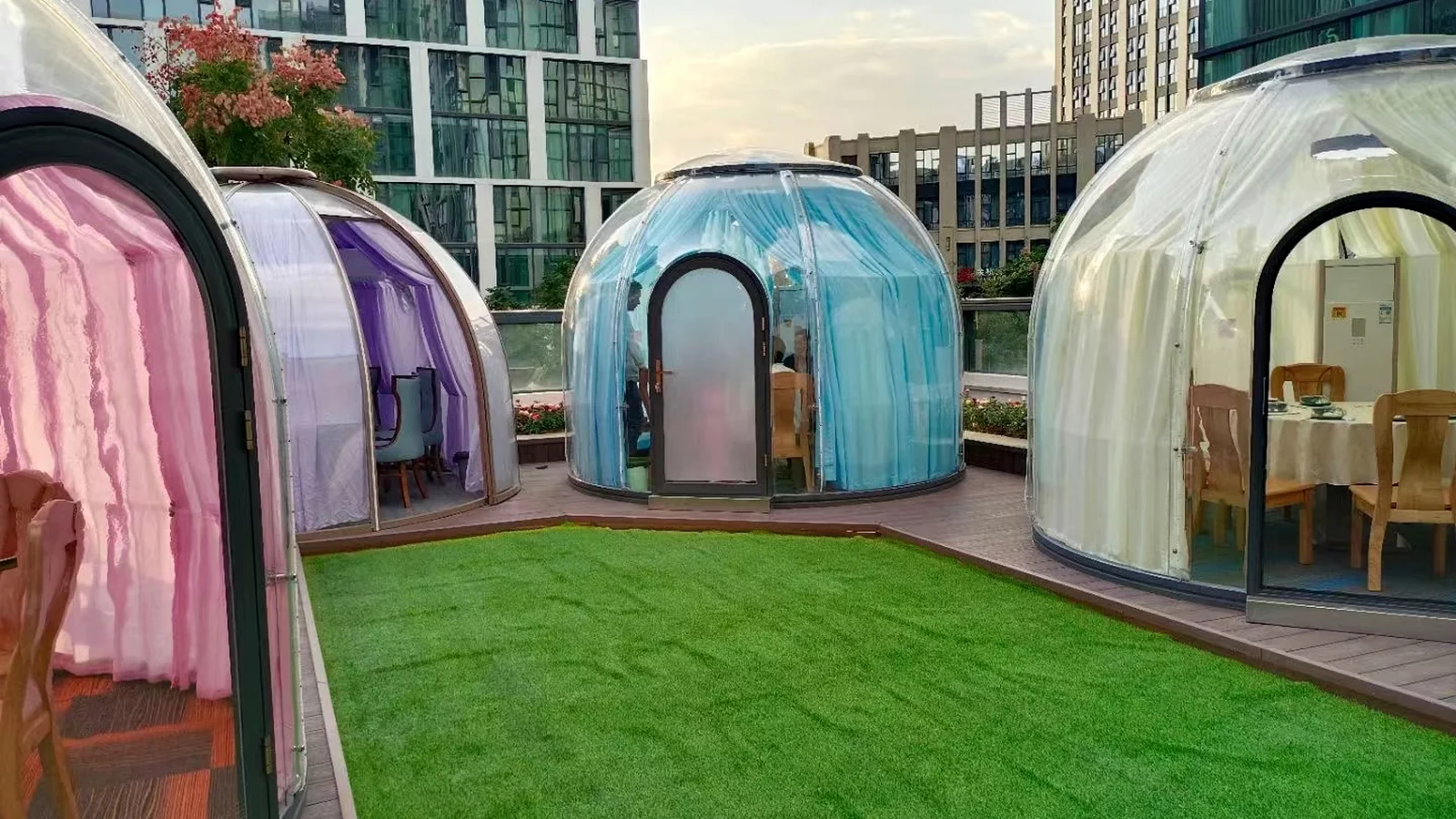
Start with the crop, not the silhouette
Write down crop height, bench layout, working aisle, target season and whether the space is propagation, production or display. A low dome may have attractive floor area but limited usable height near the perimeter. Draw the actual benches and door swing before choosing diameter.
A greenhouse that operates year-round needs a climate brief: winter design temperature, peak summer solar load, humidity target and power availability. Without it, glazing and equipment choices are guesses.
Air and water need planned routes
Warm humid air collects high in a dome, so high-level exhaust and low-level make-up air are a logical pair. Fans may still be necessary on still days. Condensation should be expected: panel joints, gutters and the floor must direct water away from plants, electrical equipment and the base.
Do not seal a greenhouse as if it were a display case. An operable vent, insect screening, service access and a cleaning route are operating equipment, not accessories.
Compare the enclosure systems
A triangulated kit offers modular assembly and readily replaceable panels, but every frame member and joint creates a maintenance point. A smooth rigid polycarbonate dome reduces the visual grid and can suit visitor-facing horticulture; curved components, door modules and freight dimensions require earlier coordination.
For either system, request the actual glazing grade, UV-protected side, light-transmission data, fire documentation where required, connection drawings and load basis. Celenest’s quoted values apply only to the confirmed configuration and should be checked against the project submittal.
The decision in one table
| Decision | Confirm before purchase | Common failure |
|---|---|---|
| Use | Occupancy, season, guest or crop needs | Choosing by appearance alone |
| Site | Loads, access, drainage, utilities and approvals | Treating the unit as independent of its site |
| Scope | Drawings, components, accessories and exclusions | Comparing incomplete headline prices |
| Operation | Cleaning, ventilation, inspection and spare parts | Budgeting only for opening day |
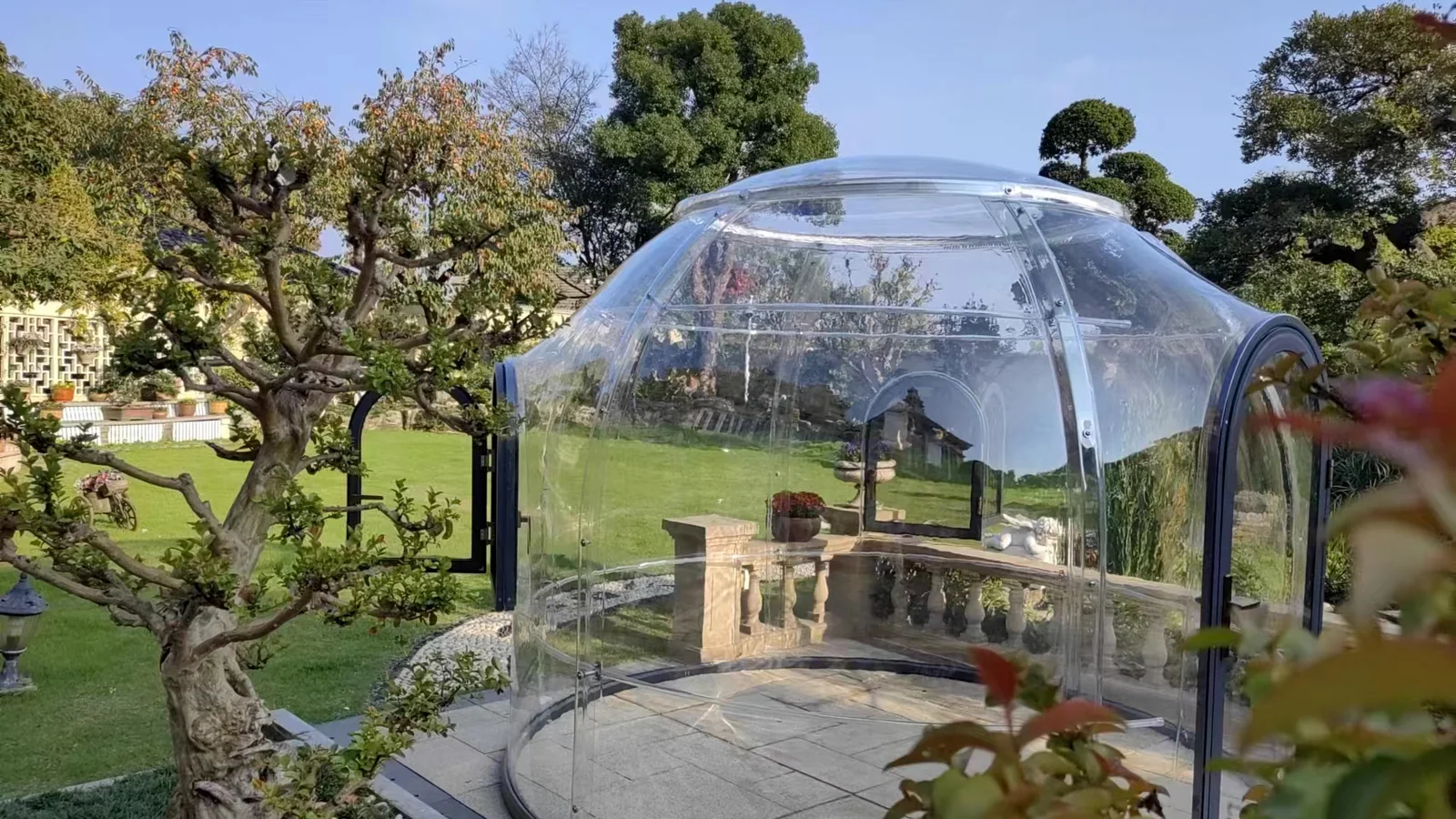
Evidence, uncertainty and editorial boundary
Search volume and difficulty describe demand, not suitability. Product performance depends on the ordered configuration, installation, maintenance and site. Planning, structural, fire, electrical, accessibility, public-health and hospitality rules vary by jurisdiction. Obtain approval from qualified local professionals and authorities where required.
Primary and authoritative sources
- Buckminster Fuller Institute: dome geometry
- Royal Horticultural Society: greenhouse ventilation and shading
Factory-ready RFQ checklist
- Crop and bench plan
- High and low ventilation openings
- Shade strategy and power
- Condensate drainage
- Foundation and local loads
- Quantity, destination, target delivery date and requested Incoterm
- Documents required for local review
Next step: Review the Celenest dome range, the real project gallery, and send a project RFQ with your site and intended use.
Frequently asked questions
Are dome greenhouses warmer in winter?
Shape can affect exposed area and air circulation, but insulation, air leakage, glazing and weather determine heat loss.
Does a dome greenhouse need opening vents?
Usually yes. Passive openings and, when needed, powered ventilation help manage heat and humidity.
Should I choose a kit or a rigid polycarbonate dome?
Choose from the operating brief: crop layout, climate, maintenance, visitor experience, freight and local approvals.