
Editorial review: Celenest Product & Project Review · Updated 2 August 2026 · Technical and regulatory claims are bounded to the cited source and project-specific verification.
Short answer: Commercial glamping development in the UK often needs planning permission, and other licences or approvals may also apply. The classification depends on land use, permanence, foundations, utilities, location and the local authority—so obtain local advice before ordering units.
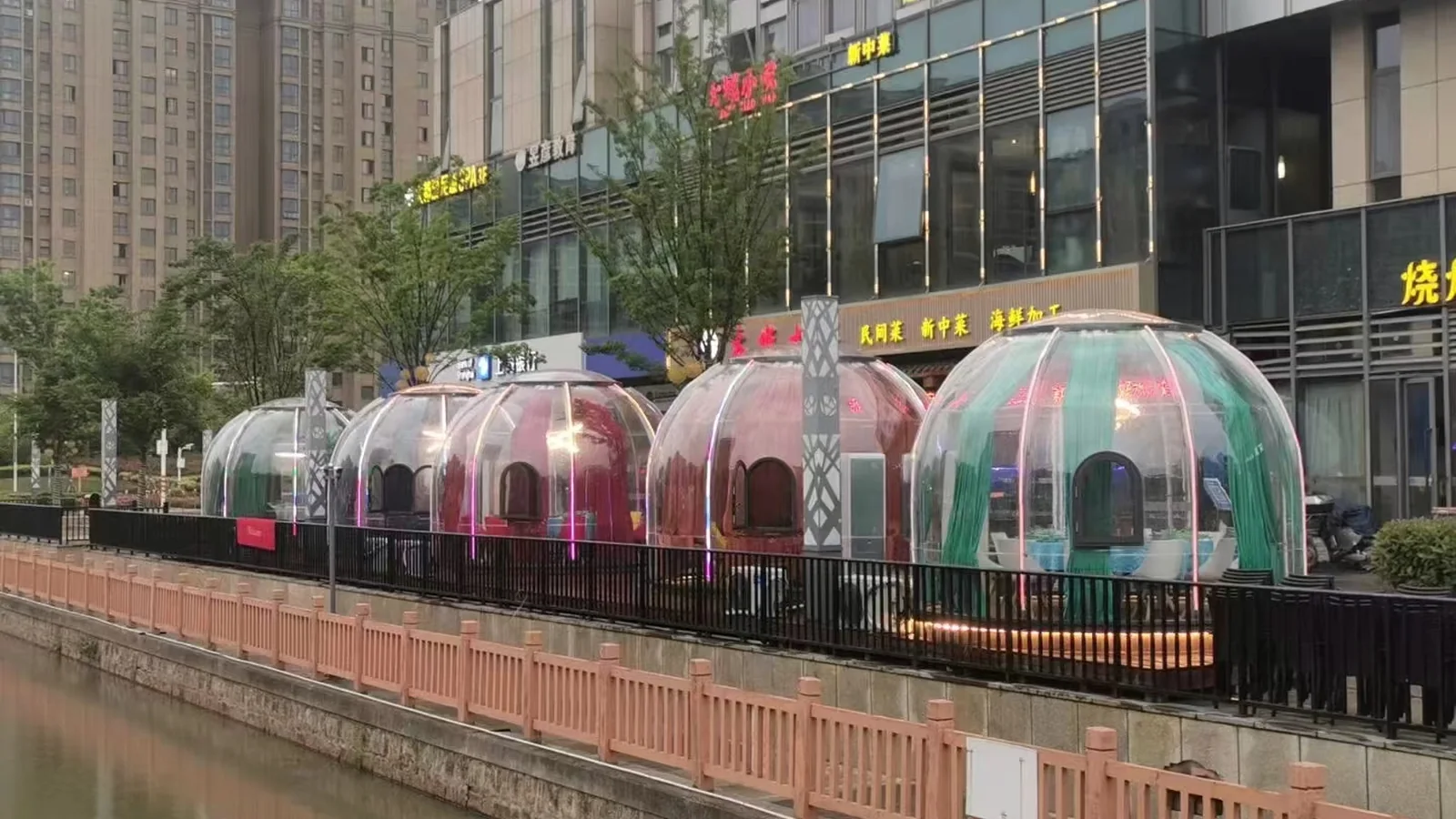
Why a yes-or-no internet answer is unsafe
Planning Portal guidance says commercial glamping pods will need planning permission where applicable, including change of use and associated utilities or access roads. Government guidance also says the local planning authority decides whether permission is required for short-term accommodation.
A dome may be treated differently depending on its dimensions, physical attachment, base, services and duration on site. Calling something “temporary” in marketing does not determine its legal status.
Prepare a useful pre-application pack
Show the red-line boundary, unit count, dimensions, decks or bases, access, parking, waste, drainage, lighting, utilities and landscaping. Add photographs from public viewpoints and explain seasonal operation, staffing and guest management.
Protected landscapes, ecological constraints, flood risk, highways, dark skies and neighbour amenity can materially change the assessment. South Downs National Park publishes a technical note specifically covering domes and other glamping accommodation, illustrating why local policy must be read.
Order only after responsibilities are divided
Record who supplies planning drawings, structural information, fire data, foundations, drainage design, electrical work and installation supervision. A product drawing is not automatically a planning set or a building-regulations submission.
Ask the local authority whether a site licence, business rates, short-let registration, food, alcohol or event permissions apply. This article is a procurement checklist, not legal advice.
The decision in one table
| Decision | Confirm before purchase | Common failure |
|---|---|---|
| Use | Occupancy, season, guest or crop needs | Choosing by appearance alone |
| Site | Loads, access, drainage, utilities and approvals | Treating the unit as independent of its site |
| Scope | Drawings, components, accessories and exclusions | Comparing incomplete headline prices |
| Operation | Cleaning, ventilation, inspection and spare parts | Budgeting only for opening day |
Evidence, uncertainty and editorial boundary
Search volume and difficulty describe demand, not suitability. Product performance depends on the ordered configuration, installation, maintenance and site. Planning, structural, fire, electrical, accessibility, public-health and hospitality rules vary by jurisdiction. Obtain approval from qualified local professionals and authorities where required.
Primary and authoritative sources
- Planning Portal: glamping pod permission
- GOV.UK: self-catering rules
- South Downs: Camping and Glamping TAN
Factory-ready RFQ checklist
- Local planning authority pre-application advice
- Land-use and permanence classification
- Site licence and short-let requirements
- Highways, ecology, drainage and lighting
- Supplier/local-professional responsibility matrix
- Quantity, destination, target delivery date and requested Incoterm
- Documents required for local review
Next step: Review the Celenest dome range, the real project gallery, and send a project RFQ with your site and intended use.
Frequently asked questions
Do all UK glamping domes need planning permission?
Not necessarily in every circumstance, but commercial use often does. Ask the relevant local planning authority about the specific site and structure.
Does a removable dome avoid planning permission?
Not automatically. Size, permanence, attachment, works, land use and local policy all matter.
Should I order before applying?
Usually it is safer to establish the approval path and required documentation before committing to equipment.