
Editorial review: Celenest Product & Project Review · Updated 2 August 2026 · Technical and regulatory claims are bounded to the cited source and project-specific verification.
Short answer: A geodesic dome is a curved enclosure assembled from a network of triangles. The geometry distributes forces through many connected members; the finished performance still depends on frequency, connections, base anchorage, cladding and site loads—not on the dome shape alone.
The idea in plain English
Triangles resist shape change better than rectangles with unbraced corners. Repeating triangles across part of a sphere creates a shell with many alternate load paths and a large clear interior. The Buckminster Fuller Institute traces Fuller’s commercial dome work to the 1950s and describes his aim as “doing more with less.”
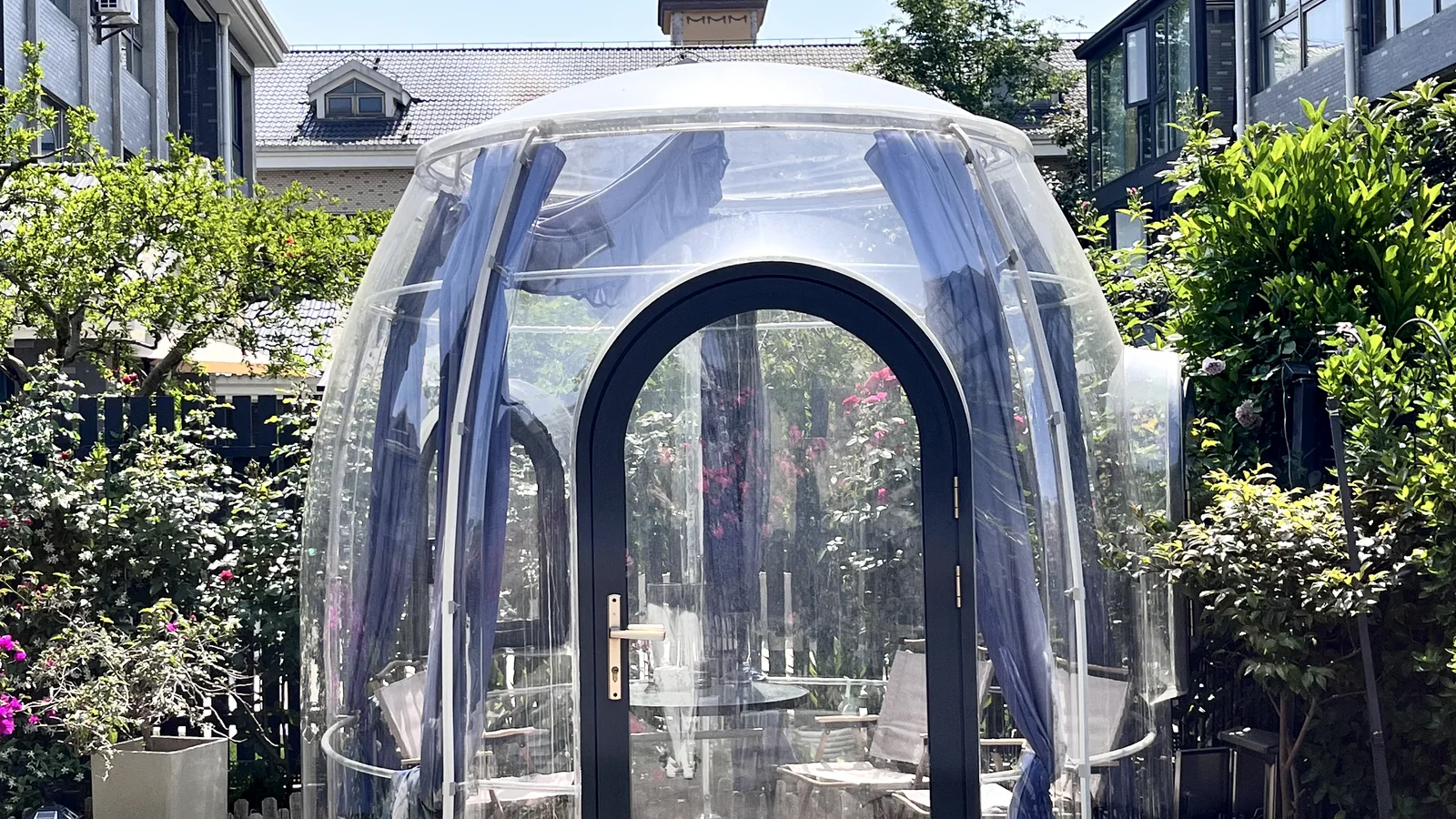
Geodesic describes the structural grid. It does not tell you whether the enclosure is canvas, glass, acrylic or solid polycarbonate. That distinction matters to a buyer: a fabric camping tent, a framed event dome and a rigid transparent pod can share a search term while serving different jobs.
Where domes work—and where they do not
Domes suit spaces where a panoramic view, column-free floor and distinctive exterior help the business case: stargazing rooms, private dining, garden retreats, greenhouses and event venues. They are less convenient where straight walls, standard cabinetry or effortless room subdivision dominate the brief.
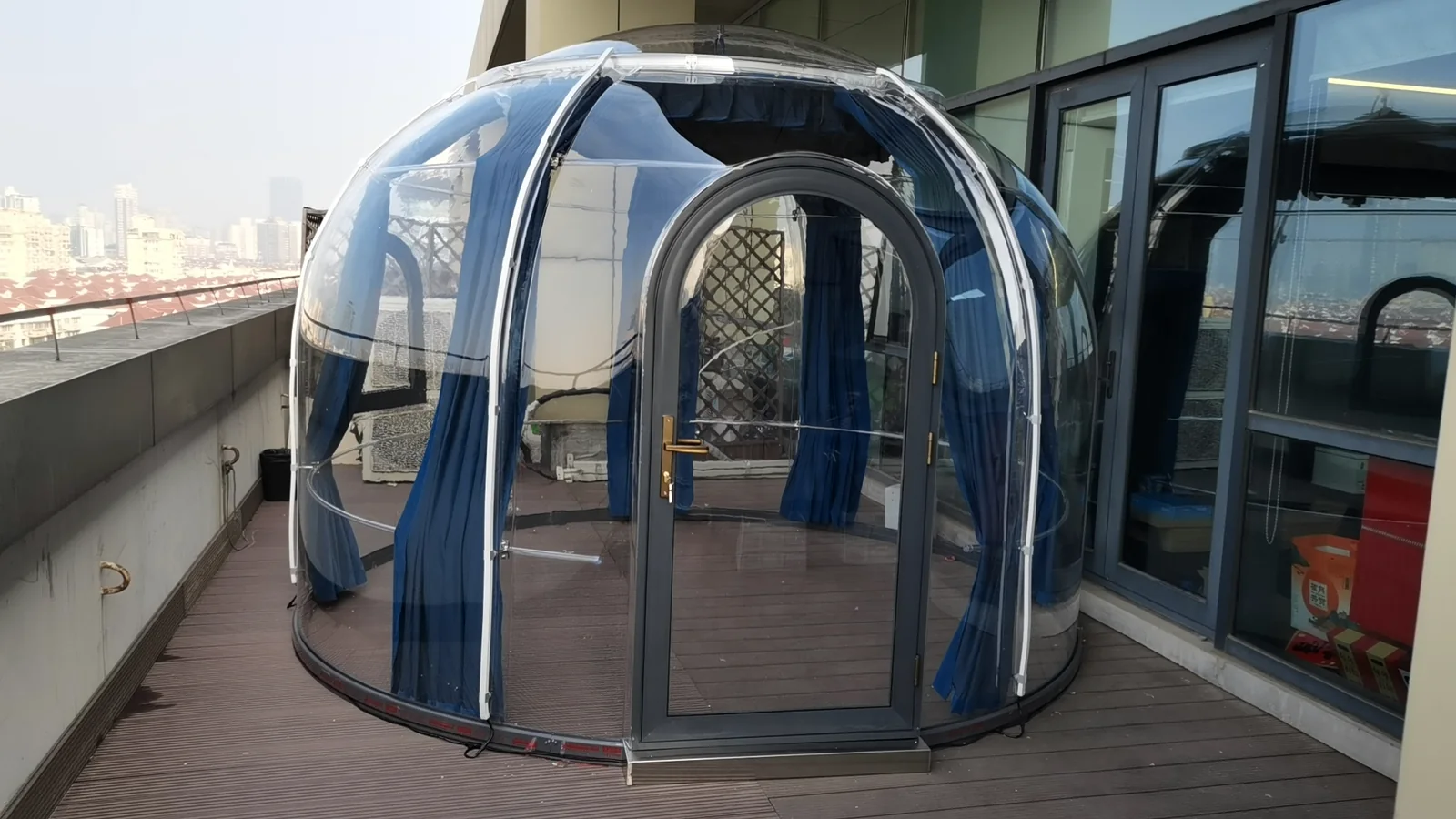
Before admiring a rendering, ask what happens at the base ring, door opening and panel joints. Openings interrupt the idealised shell and must be treated as engineered details. Local wind, snow, seismic, fire and access rules remain project-specific.
Material changes the experience
A membrane kit is light and transportable but behaves like a tent. A framed glass dome can deliver clarity but adds weight and many joints. A rigid polycarbonate shell can reduce visual framing and offers impact resistance, yet it still needs UV protection, ventilation, drainage and a suitable foundation.
Celenest supplies rigid polycarbonate domes rather than fabric geodesic tents. That makes the comparison useful, but not interchangeable: send the application, diameter, location, design loads and intended occupancy before requesting a specification.
The decision in one table
| Decision | Confirm before purchase | Common failure |
|---|---|---|
| Use | Occupancy, season, guest or crop needs | Choosing by appearance alone |
| Site | Loads, access, drainage, utilities and approvals | Treating the unit as independent of its site |
| Scope | Drawings, components, accessories and exclusions | Comparing incomplete headline prices |
| Operation | Cleaning, ventilation, inspection and spare parts | Budgeting only for opening day |
Evidence, uncertainty and editorial boundary
Search volume and difficulty describe demand, not suitability. Product performance depends on the ordered configuration, installation, maintenance and site. Planning, structural, fire, electrical, accessibility, public-health and hospitality rules vary by jurisdiction. Obtain approval from qualified local professionals and authorities where required.
Primary and authoritative sources
Factory-ready RFQ checklist
- Intended use and occupancy
- Local wind, snow and planning requirements
- Base, anchors and drainage
- Door and service penetrations
- Cladding, UV protection and ventilation
- Quantity, destination, target delivery date and requested Incoterm
- Documents required for local review
Next step: Review the Celenest dome range, the real project gallery, and send a project RFQ with your site and intended use.
Frequently asked questions
Is every round dome geodesic?
No. Geodesic refers to a triangulated structural network; smooth moulded shells and other dome geometries are different.
Are geodesic domes automatically storm-proof?
No. Capacity depends on the full engineered system, anchorage, openings, materials and site-specific design loads.
Can a geodesic dome be transparent?
Yes, but transparency depends on its cladding. Framed domes may use glass or plastic panels; moulded polycarbonate domes use a different structural concept.